_-lawn-8.jpg)
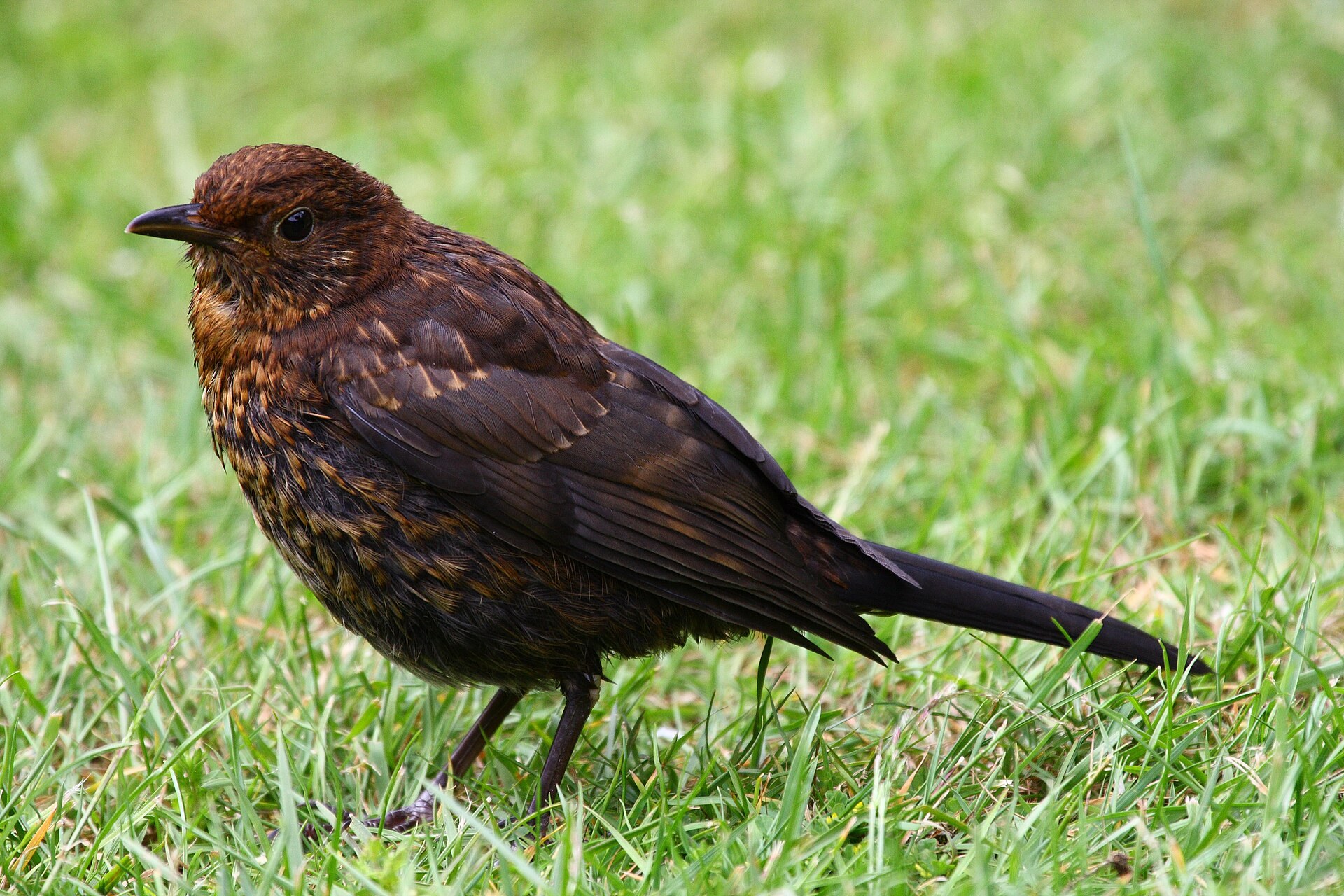
A young blackbird on the ground is usually a fledgling, not an abandoned chick. Blackbirds leave the nest before they can fly confidently. They may hop through grass or hide in shrubs while their parents find and feed them. If the bird is feathered, alert and out of danger, the best help is to give it space and keep pets away.
Before deciding it is orphaned
Watch a healthy, feathered fledgling from indoors or well back. If no parent returns after more than two hours of continuous observation, contact a local wildlife rescue or vet. An adult may wait until people leave before feeding its young.
Why is a young blackbird on the ground?
Fledging means leaving the nest; it does not mean flying strongly or living independently. The RSPB explains that garden birds leave before they can fly and that their parents usually continue caring for them nearby. A person standing close can prevent a parent from returning, so a quiet watch from a distance tells you more than a close inspection.
They intentionally leave the nest before they can fly
This is about the familiar Eurasian blackbird in Britain and Ireland. A newly fledged bird may look unlike the glossy black adult male: the British Trust for Ornithology describes young blackbirds as warm brown and speckled. Look for a mostly feathered bird that can stand, grip and hop, even if its flight is weak.
What should you do when you find one?
Check from a distance. Is it feathered, alert and moving normally? Watch for an adult returning with food.
Keep the area quiet. Move people and pets away. If you have a cat, keep it indoors while the fledgling is nearby.
Move it only if there is immediate danger. If it is exposed on a road or in a place where it cannot stay, use gloves and put it in nearby shelter, such as beneath a hedge. Keep it within a few metres of where you found it so its parents can locate it.
The RSPCA’s baby-bird guidance recommends leaving a healthy fledgling alone and monitoring it. It also advises a short move to shelter when the bird is in immediate danger. Do not take a healthy fledgling indoors to raise it.
How can you tell when it needs help?
A nestling has no feathers or only a few. It should be in a nest. If you can identify its nest and reach it safely, return the chick there; if the nest is missing or damaged, follow the RSPCA’s replacement-nest advice or call a wildlife rescue for guidance. Do not put a bird into a nest unless you are sure it is the right one.
A fledgling is mostly feathered and may be on the ground by choice. Seek prompt advice from a local wildlife rescue or vet if it is visibly injured or sick, or if you know its parents have died. Do not offer food or water by mouth unless a wildlife professional directs you.
How long does a fledgling stay on the ground?
Fledglings can spend a few days to about a week on the ground while their flight feathers finish growing. The RSPB says this is normal for garden birds and that parents usually remain nearby. Seeing the same bird on the ground again tomorrow is not, by itself, a reason to take it indoors.
Related reading: Do Blackbirds Return to the Same Garden? How to Tell; Feeding birds in spring and summer: a practical guide.
Sources & further reading
- RSPB, “If you find an injured bird” (date not stated; checked 25 September 2026): Read source
- RSPCA, “Found a baby bird out of a nest” (date not stated; checked 25 September 2026): Read source
- British Trust for Ornithology, “Identifying young birds” (date not stated; checked 25 September 2026): Read source