,_Bristol,_UK.jpg)
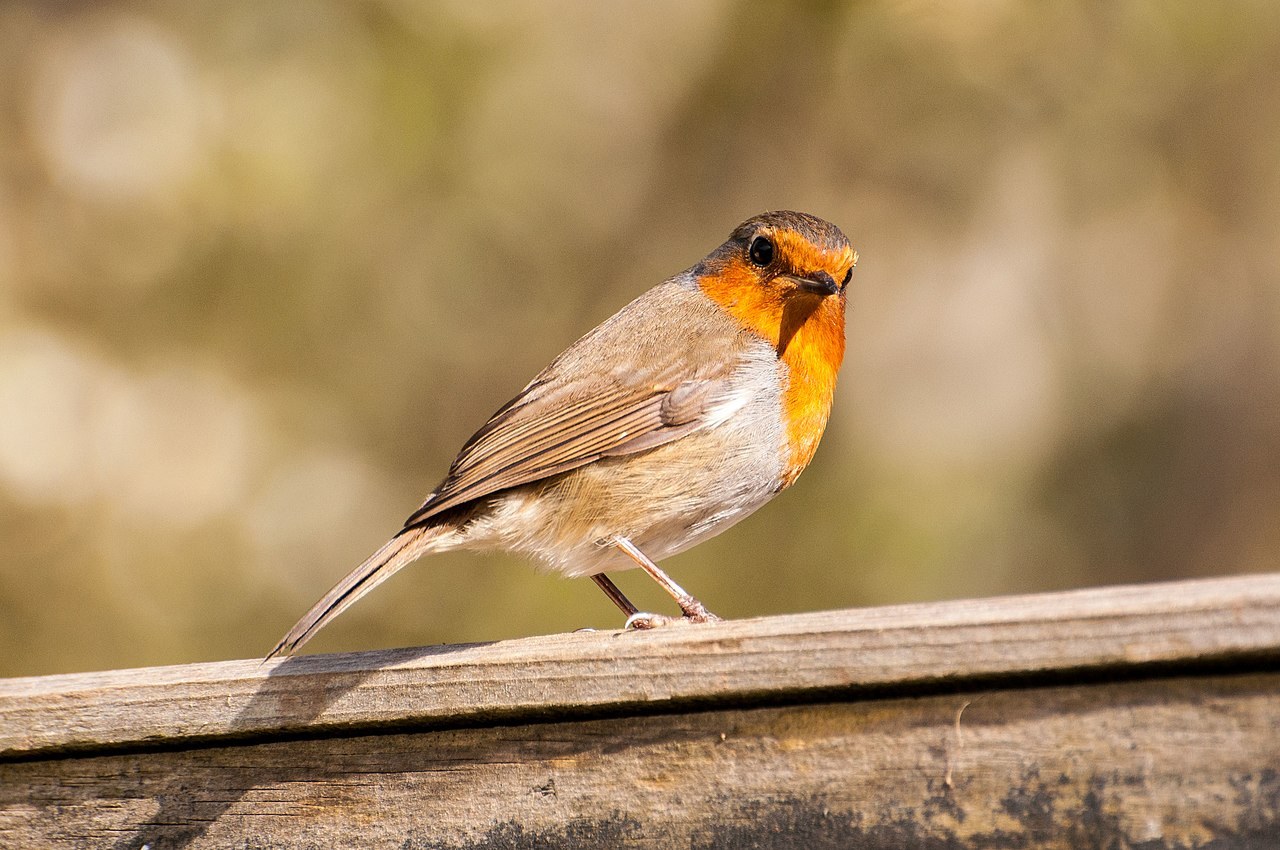
A European robin may grow used to a regular gardener, but one that flies over while you dig has not necessarily recognised your face. In a UK garden, exposed worms and insects are a clear reason for its interest. The often-cited experiment on recognising individual people involved a different bird: New Zealand’s North Island robin.
This guide is about the European robin (Erithacus rubecula) seen in UK gardens. It explains what a close visit can mean, what the research actually tested, and how to observe your visitor without turning a guess into a certainty.
Why does a robin follow you around the garden?
Digging, weeding and moving leaves can expose food. The RSPB’s European robin guide describes robins following gardeners to pick up worms and grubs from disturbed soil. A bird waiting near your spade may be watching for the next chance to feed, rather than seeking your company.
The bird’s confidence also has limits. It can stay close while you work and fly off when you move towards it. That change does not show affection or dislike; it tells you how it responds to the situation. Robins also defend territories against other robins, so a calm encounter with a person says little about how they behave with their own species.
Robins are famous for following around gardeners, waiting for a spadeful of overturned soil to reveal a bounty of bugs.
Can a robin recognise an individual person?
There is evidence that some birds can distinguish people, but species and test conditions matter. In a 2013 study of North Island robins (Petroica longipes), cautious birds took longer to approach a mealworm when a new observer replaced a familiar one. The new observer also wore a different-coloured coat, so the experiment did not isolate faces as the cue. Those findings cannot be presented as proof that a UK garden robin recognises its gardener by face or voice.
The names cause confusion. As the Cornell Lab’s European robin account explains, the North American bird called a robin is also a different species. Here, “robin” means the European bird. A familiar garden visitor might learn a place, a routine or a person’s usual movements, but a close approach alone cannot tell you which cue it used.
What can you learn from watching your garden robin?
Notice when the bird arrives: before you work, as the soil is disturbed, or after you leave. Compare a few ordinary days, including times when you are outside without digging. If it appears mainly when soil is turned, the food opportunity is a good explanation. If it appears at other times too, familiarity is possible, but you still have not shown that it recognises your face or that each visit is from the same bird.
Let the bird set the distance
When the robin appears, carry on gardening at your usual pace. Do not move towards it to test whether it “knows” you: your approach changes the situation you are trying to observe. Note what exposed food was available and let the bird leave when it chooses.
Does a robin coming close mean it trusts or likes you?
It means the bird is willing to stay at that distance in that moment. The RSPB describes European robins as confident around people, especially gardeners, but this is not a measure of friendship. Let the robin decide how close to come. Watch the behaviour you can see, and leave its motives open when the evidence does not settle them.
Related reading: How to attract birds to your garden: five practical tips.
Sources & further reading
- RSPB — “Robin” (date not shown), Read source (checked 27 September 2026).
- Barnett, C., Salter, M., Chevallier, C., Robertson, N., Berard, O. and Burns, K.C. — “The Ability of North Island Robins to Discriminate between Humans Is Related to Their Behavioural Type”, PLOS ONE, 20 May 2013, Read source (checked 27 September 2026).
- Cornell Lab of Ornithology — “European Robin” (date not shown), Read source (checked 27 September 2026).