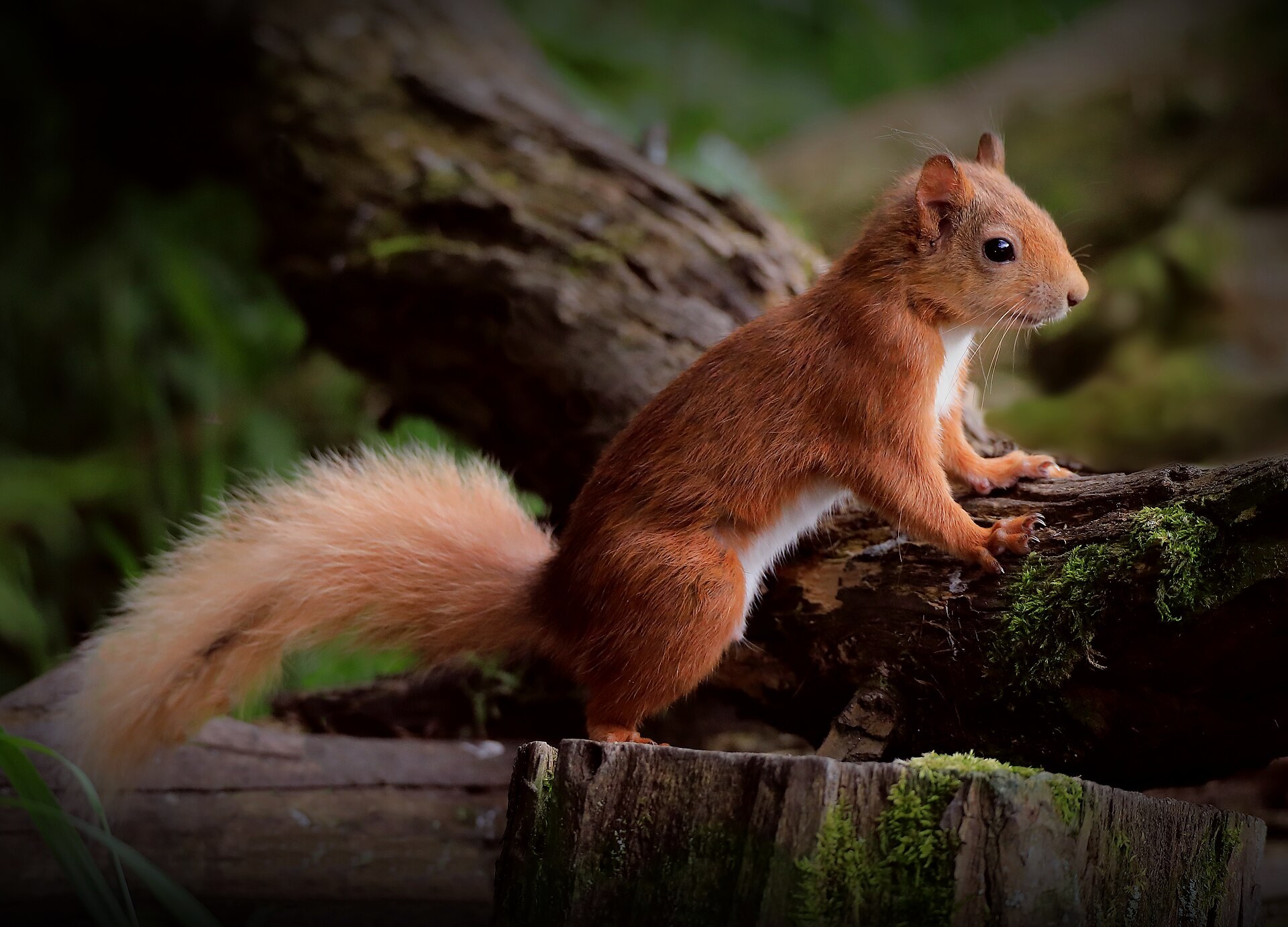

There is no single clock time when every squirrel wakes up. In the UK, wild red and grey squirrels are active during daylight throughout the year, so a morning visit is a sensible starting point. The time you actually see one depends on the species, conditions and where you watch; a late sighting does not tell you when it woke. The Natural History Museum’s guide to UK squirrel behaviour describes both species as active by day.
Red and grey squirrels are active during the day, all year round.
Is there a fixed wake-up time?
No. “Wakes at sunrise” is too precise for an individual wild squirrel. Being active by day describes a pattern, not an alarm clock. A squirrel may be in a tree, foraging out of view or sheltering when you arrive. It is more useful to choose a promising time to watch than to expect one exact emergence time.
When is the best time to see red or grey squirrels?
For red squirrels in Scotland, Saving Scotland’s Red Squirrels recommends dry, calm autumn early mornings or later afternoons for spotting them. It also advises looking in suitable woodland and waiting quietly. That is a seasonal watching tip, not a claim that every red squirrel wakes at dawn.
For grey squirrels, the RSPCA’s grey squirrel guidance says they tend to be more active in mid-morning and mid-afternoon, when they are likely to be away from the nest foraging. This is a useful time to try in a park or garden with trees. It is a tendency, not a guaranteed sighting or a fixed waking hour.
Give a red-squirrel spot time
In known Scottish red-squirrel habitat, choose a dry, calm autumn morning or later afternoon. Stand still and quiet for about 20 minutes, scanning tree trunks and branches before moving on. A no-show is only a missed sighting.
Do squirrels sleep at night?
UK red and grey squirrels are principally daytime animals. If you want to watch them, choose daylight rather than planning a night-time search. The Natural History Museum describes their nests, called dreys, as leafy structures built in trees; squirrels may also use tree hollows. Neither a visible drey nor an empty feeding spot tells you exactly when its resident is asleep.
Why might I see fewer squirrels in winter?
Red and grey squirrels do not hibernate. The Natural History Museum says they still need to go out for food, but may stay in a drey for several days during cold weather. A quiet winter morning therefore does not mean the local squirrels have disappeared or are hibernating. Try again in daylight under calmer conditions, while allowing for fewer sightings than in warmer weather.
What should I do if I see none?
First check that you are in suitable tree cover and give the area time to settle. In a Scottish red-squirrel area, watch for chewed cones or movement in the branches as well as the animal itself. A single unsuccessful visit cannot establish that squirrels are absent. Try a different daylight period or another suitable place rather than treating one missed sighting as a measure of their sleep.
If you are specifically looking for red squirrels, first check that they occur in your area. The Natural History Museum notes that reds now have only a few UK strongholds, while greys are much more common in most places. If you are outside a red-squirrel area, changing the hour of your visit is unlikely to help.
Related reading: Do Squirrels Come Back to the Same Nest? A UK Drey Guide; Red vs Grey Squirrels: How to Tell Them Apart in the UK.
Sources & further reading
- Natural History Museum — Emily Osterloff, “Squirrels in the UK: What they’re up to, when and why” (undated). Read source (checked 27 September 2026).
- Saving Scotland’s Red Squirrels — “How to spot a squirrel” (16 September 2025). Read source (checked 27 September 2026).
- RSPCA — “Living with grey squirrels” (2015). Read source (checked 27 September 2026).