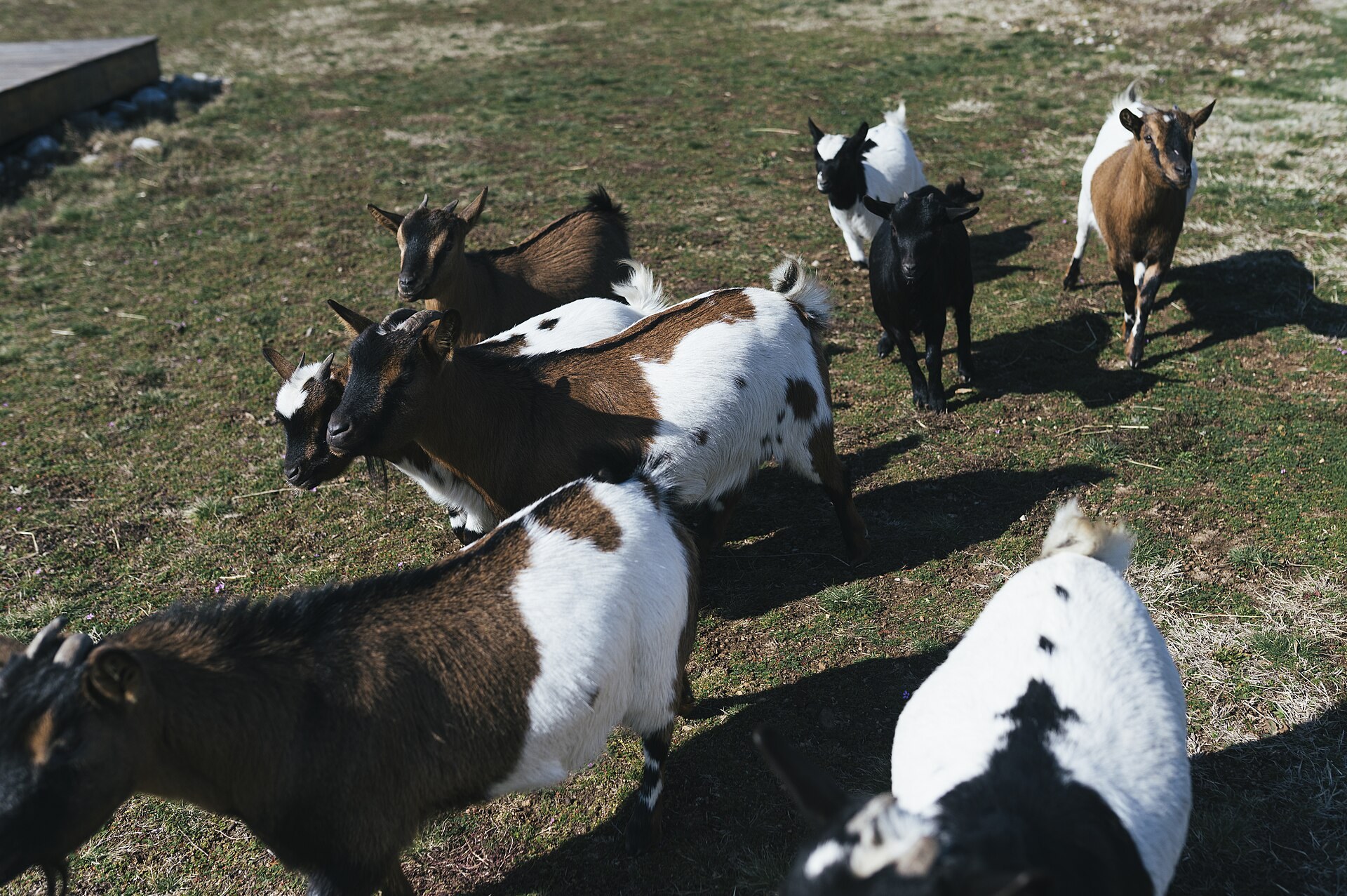

Goats and pigs can sometimes share an enclosure, but compatibility is not guaranteed. For someone planning to keep both, separate enclosures with suitable companions of each species are the sensible starting point.
This guide covers domestic goats and pigs, using RSPCA care guidance from England and Wales alongside US sanctuary guidance. It is a planning guide for keepers, rather than a complete husbandry or legal checklist.
Is a shared pen safe for goats and pigs?
The Open Sanctuary Project’s cohabitation guidance considers individual temperament, size, health, diet and the physical environment. A calm encounter alone does not establish compatibility.
Risks include accidental injury during feeding, injury from a male pig’s tusks and pigs tipping hay feeders. This does not mean every pig is aggressive.
Keep goat mineral supplements inaccessible to pigs, including salty runoff beneath them. They can pose a salt-poisoning risk. Ask a pig-experienced vet to assess the products and layout.
Can a goat be a pig’s only companion?
Plan for companions of the same species. The RSPCA’s guidance on goat company recommends at least two compatible goats, ideally animals already accustomed to one another. Another farm animal does not meet that recommendation.
“Goats are social herd animals and need the company of other goats.”
Its pet-pig care guidance likewise recommends at least two pigs that get on well. It also advises feeding an age- and breed-appropriate commercial pig ration and providing clean drinking water continuously. Budget for two social groups, not one goat and one pig as a shortcut.
Can they eat from the same feeder?
Give them separate, secure feeding areas. The cohabitation guidance above recommends separating pigs from other species at meals to control access to food and reduce the risk of accidental injury. Simply putting two bowls in opposite corners does not prevent animals swapping meals.
For goats, the RSPCA’s feeding advice emphasises long, fibrous forage such as good-quality hay, with concentrates used according to need. Avoid sudden dietary changes. Provide enough feeding space for all the goats, and use a suitable hayrack rather than a hay net, which can entangle them.
Do not assume feeds are interchangeable because both bags are sold for farm animals. Keep feed stores and supplements secure, and ask your vet or qualified livestock nutrition adviser to check each species’ ration. Give each group its own reliable source of fresh water.
What housing and fencing do they need?
Start with separate sleeping and outdoor areas, then check each against the animals’ needs:
For goats: the RSPCA’s housing guidance calls for permanent access to dry shelter, safe opportunities to browse and climb, and strong fencing that prevents escape without trapping heads or legs. Preserve dry ground in winter and keep bedding clean.
For pigs: its pig-environment guidance recommends dry, ventilated, draught-free housing, robust fencing, shade and a wallow in warm weather. Allow for rooting: pigs can substantially disturb soil and remove vegetation.
A paddock that suits goats today may look very different after pigs have rooted through it. Assess drainage, shelter access and the condition of the ground, as well as the total area available. A larger field does not solve an unsuitable feeder or insecure fence.
What should you decide before keeping both?
Use this practical planning checklist, based on the care requirements above:
Draw the layout: mark a complete living area for each species, including shelter, water, feeding and secure gates.
Plan companionship: identify suitable companions within each species before bringing animals home.
Check daily access: make sure you can feed, clean and inspect each group without opening a route into the other enclosure.
Arrange professional support: review the plan with a livestock vet, including health precautions for new arrivals and the needs of any young, elderly or vulnerable animals.
Keep separation workable: do not make the setup depend on the animals always choosing to get along.
If animals already share space and one is injured or cannot access food, water or shelter, arrange safe separation and seek veterinary advice. The useful question is whether you can meet both species’ needs every day, including when shared space stops working.
Related reading: What Do Kunekune Pigs Eat? A Practical UK Feeding Guide; How Long Can You Leave a Mini Pig Alone?.
Sources & further reading
- The Open Sanctuary Project: Safe Cohabitation Considerations For Pigs, Tara Hess (1 August 2018; partially updated 28 May 2026). RSPCA: Pet goats need company; Caring for pet pigs; Goat diet; Where pet goats should live; Environment for pigs kept as pets (all undated). All six sources checked 24 September 2026 and linked beside the relevant guidance. RSPCA material concerns care in England and Wales; Open Sanctuary provides US sanctuary guidance.