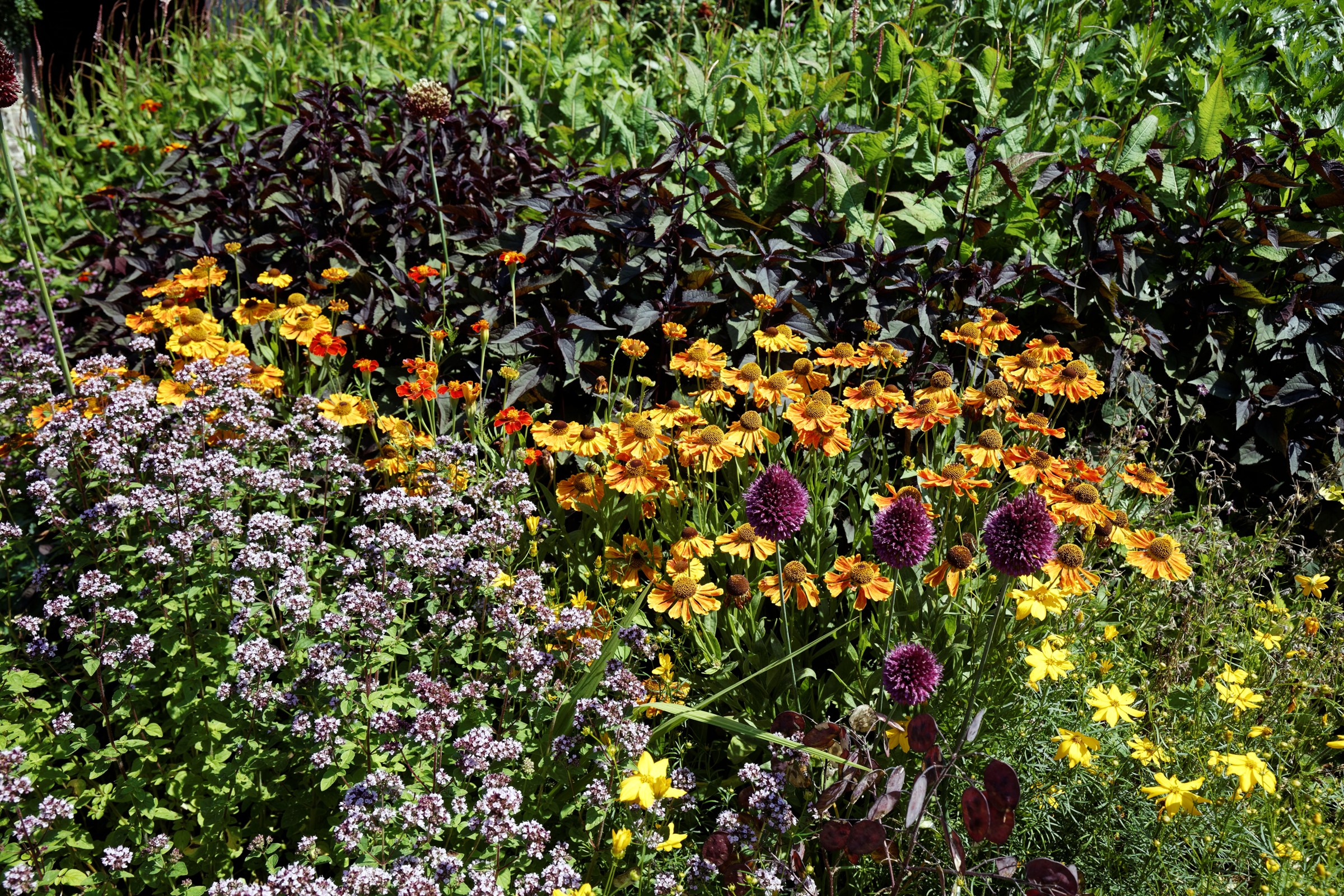

A border can be full of colour in June and almost empty when a bumblebee queen emerges in spring or new queens are feeding in autumn. The useful way to plan for pollinators is to find the quiet weeks in your own garden, then add flowers for those gaps. A few well-placed pots can help as much as another crowded summer bed.
Make a flower calendar before buying
Walk round the garden every couple of weeks from early spring to autumn. Write down what is actually in bloom, including shrubs, climbers, herbs and flowers you did not plant. Note where insects are visiting; a label alone cannot tell you whether a particular variety is useful. The RHS review of nectar in urban gardens found that planting and management mattered more than garden size, and that a mix of flowering times steadied the supply.
Mark any stretch with little open bloom. Suppose an apple flowers in April and lavender carries June and July, but there is little else until ivy flowers in autumn. Late summer is the gap to fill: a stonecrop in a sunny pot may be a better choice than another June flower. Flowering dates shift with weather and place, so overlap neighbouring seasons instead of treating a catalogue month as a promise.
Fill the early and late gaps first
In early spring, try crocus, lungwort or hellebores if the site suits them. A flowering currant, apple blossom or another spring shrub can offer many flowers in a small footprint where there is room for its mature spread. The RHS research list places lungwort and hellebores in March, with currants and apple in April–May.
Through early and midsummer, bellflowers, hardy cranesbills, lavender and common honeysuckle are among the RHS examples. Give each the light and soil it needs. Do not fill every space with one flower shape: open flowers are accessible to many hoverflies and short-tongued bees, while deeper flowers can serve long-tongued bumblebees. The Bumblebee Conservation Trust's gardening guide recommends a mix of shapes and grouping plants of the same kind where space allows.
Late summer and autumn often need the most deliberate planting. Oregano, stonecrop, coneflower and mature ivy are on the RHS August–October list. A stonecrop in a pot can bridge the gap in a small sunny space; established ivy may cover a boundary and flower later, provided it is allowed to reach its adult flowering stage. These are examples, not a compulsory shopping list.
A three-season check for one small space
For a patio or small border, write down one plant already flowering in spring, summer and autumn. Add to the empty season first. Choose a flower shape different from those you already have, place the pot where its light needs are met, and check it again when it should be in bloom.
“Late summer and autumn is often a time when nectar provision drops”
Keep the flowers usable
Choose open, single flowers over densely double varieties that hide their centres. The RHS wildlife gardening advice warns that many highly bred double flowers offer little or no pollen or nectar. Watch real visits when you can, including hoverflies and moths as well as bees; different insects use different flowers.
Water containers when they dry, especially during flowering. Deadhead plants that respond by flowering again, but do not clear every spent stem: some seedheads and hollow stems have value for wildlife later. Avoid spraying flowering plants. The Bumblebee Conservation Trust cautions that pesticides applied to leaves can reach nectar and pollen.
Review the gaps next year
Your first calendar will be imperfect. Weather can compress one flowering spell and stretch another. Keep the plants that thrive and are visited, move those in the wrong position, and fill the next gap you observe. That yearly adjustment is more useful than a long list of “pollinator plants” bought all at once.
Sources & further reading
- Royal Horticultural Society. “How urban gardens can boost nectar for pollinators”, undated. Checked 1 October 2026 — Read source
- Bumblebee Conservation Trust. “Gardening for bumblebees: getting started”, February 2025. Checked 1 October 2026 — Read source
- Royal Horticultural Society. “Encourage wildlife to your garden”, undated. Checked 1 October 2026 — Read source