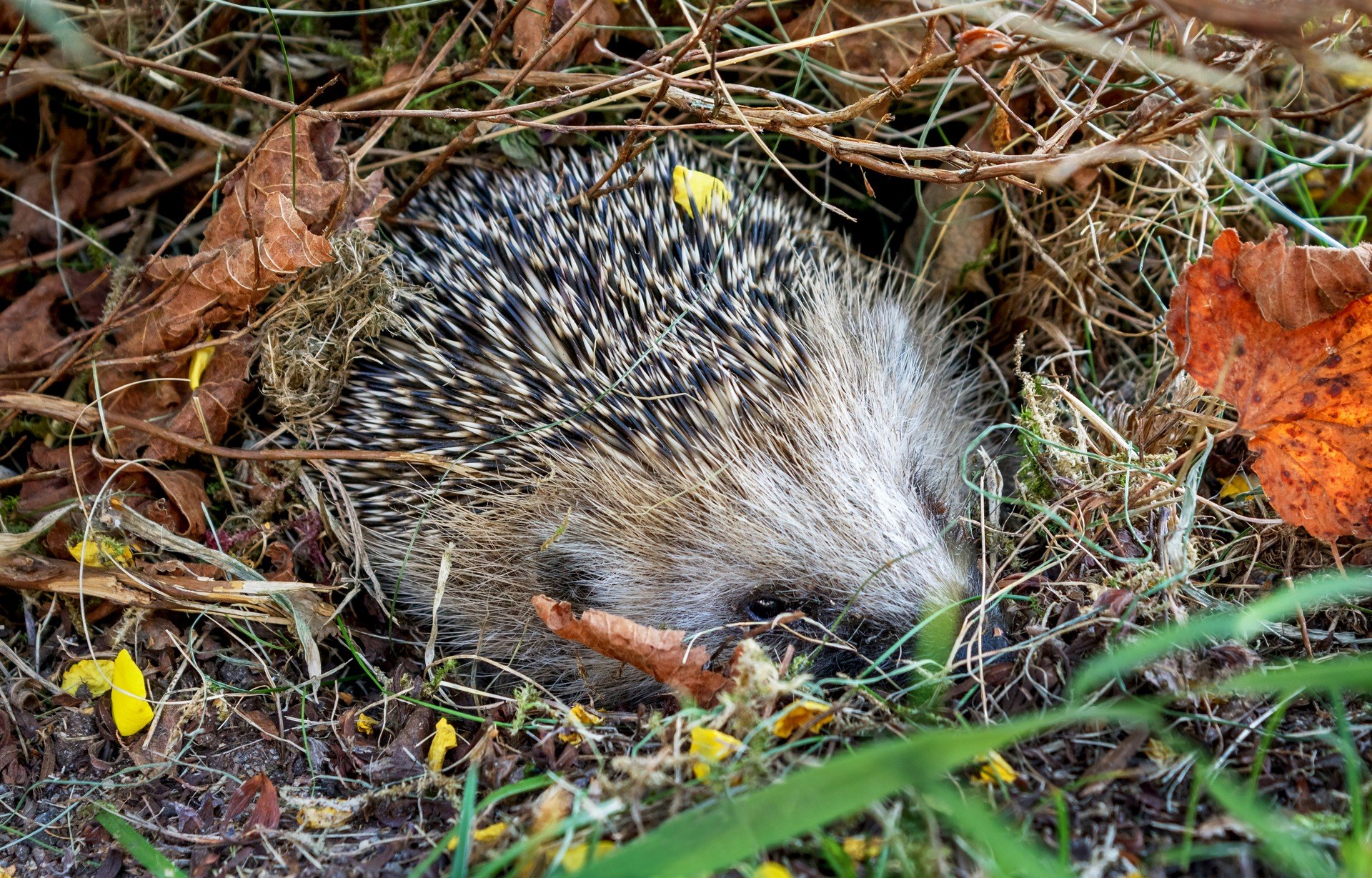

The best way to protect hedgehogs this Bonfire Night is to avoid a garden bonfire. If you have one, build it on the day, move stored material to a clear site immediately before burning, and check the whole pile before lighting. A glance around the outside is not enough.
This hedgehog safety guide is for UK gardens, with particular attention to 5 November and autumn clearing. It covers preparing a pile, finding an animal inside it, and knowing when to get help.
Before Bonfire Night: decide what really needs burning
Start with the British Hedgehog Preservation Society's seasonal advice: consider a celebration without your own bonfire. A heap of dry leaves and branches can become a winter refuge, so do not treat stored garden material as empty fuel.
“Never use a spade or fork, as these can cause great harm.”
Our practical suggestion is to make two separate decisions: how to mark the evening, and how to deal with garden cuttings. That prevents a clearing job turning into an unchecked bonfire by default. Tell everyone helping which material is intended for burning and which log or leaf piles are being kept for wildlife.
How to check a bonfire pile
The RSPCA's bonfire guidance recommends rebuilding on clear ground and inspecting immediately before lighting. An adult should carry out the checks.
Choose a clear location. Avoid existing leaf heaps and pampas grass, which may contain nests.
Build on the day. If wood has already been collected, move the entire pile to the new site by hand just before lighting, checking as you go.
Look through every section. Use a torch and gently lift sections with a broom handle or pole. Check the centre and base as well as the edges. Never push a fork, rake or spade into the heap.
Pause if you find wildlife. Do not light the pile while an animal remains inside. Deal with the animal safely before continuing.
Light from one side only. Once the checks are complete, this leaves an unlit route for anything missed. It does not replace the inspection.
These precautions also apply to garden fires at other times of year. A bonfire pile does not become safe simply because November has passed.
If you find a healthy hedgehog in an unlit pile
For an apparently uninjured animal discovered during these checks, BHPS recommends lifting it with gardening gloves or a folded towel, keeping its nesting material with it. Place it in a high-sided box with bedding and a secure, ventilated lid.
Keep the box in a quiet, sheltered place away from the event. Offer water and meaty cat or dog food. Once the fire's embers have been completely dampened down that night, release it with its nest material beneath nearby cover, close to where it was found. Do not take it to a different garden.
If you are unsure whether it is healthy, or find young with it, contact a wildlife rehabilitator before deciding what to do. Do not use this temporary holding-and-release advice for an injured animal.
When a hedgehog needs urgent help
A hedgehog that is visibly injured, appears ill, or has been caught in a fire needs professional assessment. Contact a vet promptly; a wildlife rehabilitator can advise if you cannot reach one. BHPS can help you find a local rescue on 01584 890 801.
Follow the RSPCA's injured-hedgehog advice: if it is safe to pick the animal up, use thick gloves or a towel, support its body and place it in a secure box with ventilation and towel bedding. Keep it quiet while arranging help, minimise handling and wash your hands afterwards. Call ahead to check the vet can receive it.
Do not enter a burning pile or put yourself in danger to reach an animal. A healthy hedgehog going about its normal night-time activity should not be collected merely because it is November. For winter sightings, see our guide to hedgehog hibernation and winter care.
Make autumn garden jobs safer too
Bonfires are only one hazard. The BHPS gardening guidance also highlights mowing, netting, water and uncovered holes.
Check long grass before mowing or strimming. Cut overgrown areas high first, then inspect again before cutting lower.
Store unused sports nets safely and keep garden netting raised so animals cannot become tangled at ground level.
Cover drains and provide an escape route from ponds and other water hazards.
Take care with compost and leaf piles. If you disturb a nest, stop work and replace its covering; seek advice if young are present.
For a longer-term plan, read how to make your garden welcoming for hedgehogs. If you provide supplementary food, our guide to what wild hedgehogs eat explains suitable choices and feeding hygiene.
Sources and editorial notes
UK guidance checked on 23 September 2026. Sources linked beside the relevant advice: British Hedgehog Preservation Society, seasonal bonfire guidance (21 September 2026) and gardening guidance (undated); RSPCA, bonfire and injured-hedgehog guidance (undated). Neither organisation has reviewed or endorsed this article. Recheck rescue contacts and seasonal advice before Bonfire Night.