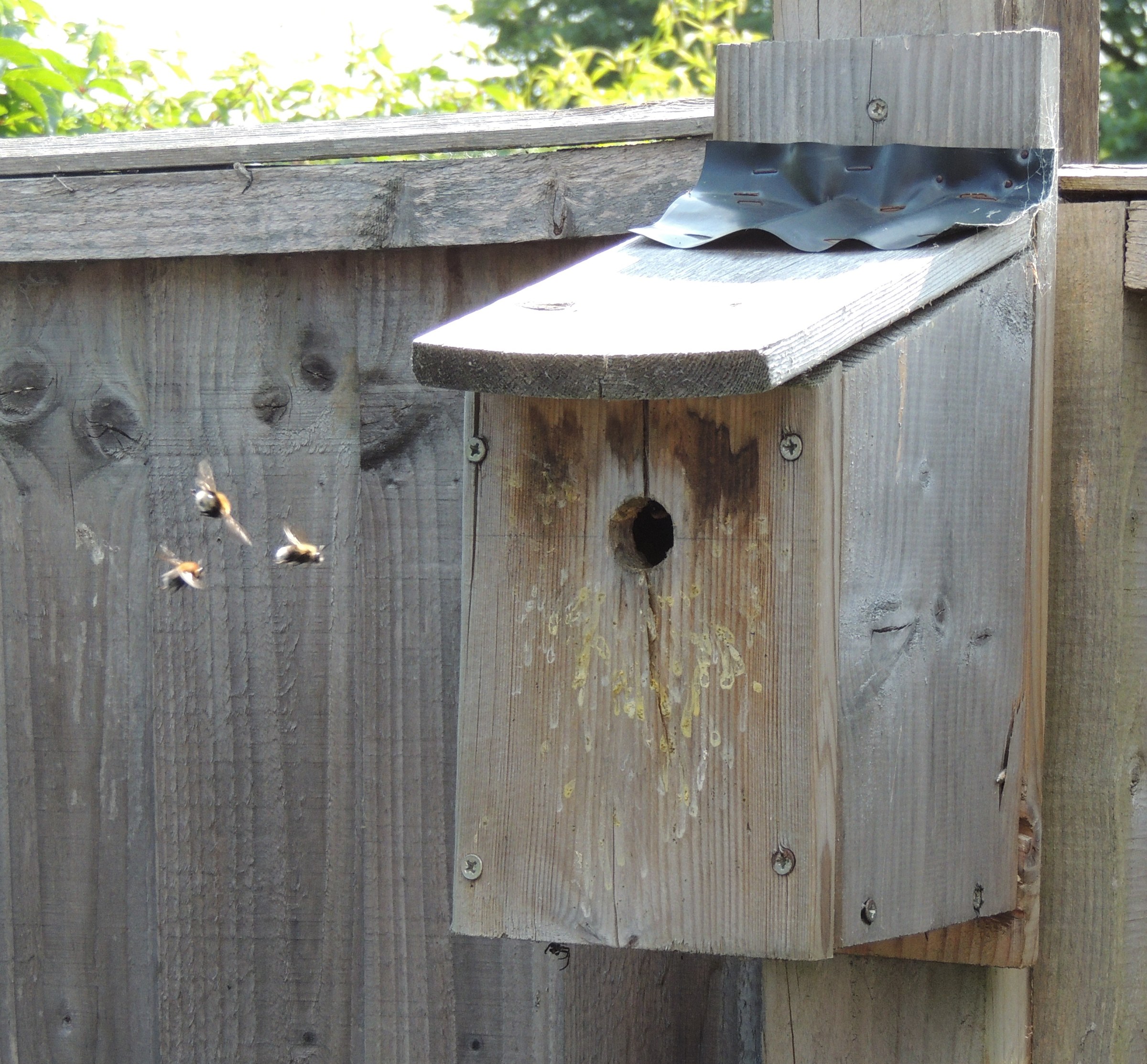
_outside_a_nest_in_birdbox,_Sandy,_Bedfordshire._(9240995171).jpg)
If bumblebees are using a hole in the ground, a bird box or a gap near the house, give the entrance space and leave the nest in place if you can. A few temporary changes to how you use the garden are usually enough. First watch from a safe distance to check what is going in and out; then keep children, pets and noisy garden work away from that route.
Watch the entrance before you change anything
A bumblebee nest can be much less obvious than the traffic around it. You may see furry bees flying repeatedly to the same opening, sometimes with pollen on their hind legs. The entrance may be among grass, in a bird box or near a roof space. Do not pull apart a structure to identify it. If the insects are hard to see, take a photograph from a distance and compare it with the Bumblebee Conservation Trust's identification guide.
A busy entrance does not always mean a huge colony. Nest size and activity change through the season. Tree bumblebees, for example, may have a small cloud of males waiting outside a nest box for new queens. Male bumblebees cannot sting. A swarm of hundreds or thousands of bees is different; the Trust's nest guidance says that is likely to be honeybees and advises contacting a local beekeeper. If you cannot identify the insects confidently, keep your distance and leave the site undisturbed while you check the Trust’s identification guide.
Give the nest a clear flight path
Bumblebee colonies are temporary. The Trust says a nest usually lasts two to six months, depending on species, weather and food. Once that colony ends, its nest is not reused by the same bees, although another queen may choose the same location in a later year. That makes a short-lived change to your routine more sensible than trying to remove an occupied nest.
Look at where people actually walk and where the bees fly. Move a chair, play equipment or a regularly used potting bench away from the entrance. A temporary barrier can keep children and pets from approaching while leaving the bees' route open. If the opening is near a window, fine mesh on the window can prevent accidental indoor visits. Keep mowing and other vibration-producing work away from the nest; female bumblebees may sting defensively when the nest is disturbed.
Mark a safe route through the garden
Watch the bees' approach from a distance, then place a temporary marker or barrier where people and pets can see it. Leave the entrance and flight path unobstructed. Move seating or play to another part of the garden until the colony has finished.
“They don’t last very long, just a few months, and don’t cause any structural damage.”
If the nest has been disturbed
Stop digging, mowing or moving the material around it. The Trust advises gently putting back grass or other covering material if you can do so safely, or propping shelter over an exposed nest, then leaving the bees to repair it. Keep the entrance open. If the nest is in a bird box that truly cannot stay where it is, the Trust publishes specific moving guidance; moving a concealed nest is much harder and can damage it. Make a decision from the actual site and risk rather than assuming every nest can be relocated.
If someone is stung, move away from the nest. The NHS insect-sting guidance explains ordinary sting care and when to seek help. Call 999 for sudden swelling of the mouth or throat, breathing difficulty, collapse or other signs of a serious allergic reaction. Seek NHS 111 advice for a sting in the mouth or throat, worsening symptoms or a history of a serious reaction, as the NHS advises. A known severe allergy changes how close that person should be to an active nest; do not rely on a garden barrier as their only protection.
When the activity ends
Do not assume the nest is empty after one quiet day. The Trust suggests waiting until no bees have entered or left for at least two weeks before treating a bird-box nest as finished; waiting until October or November offers more certainty. Only then should you clean or change the box or close a gap that you do not want another queen to use. Until that point, the most useful job is simple: leave the entrance open, keep your temporary route in place and let the colony finish its season.
Sources & further reading
- Bumblebee Conservation Trust. “Bumblebee nests”, undated. Checked 1 October 2026 — Read source
- Bumblebee Conservation Trust. “Identifying bumblebees”, undated. Checked 1 October 2026 — Read source
- NHS. “Insect bites and stings”, reviewed 1 June 2023. Checked 1 October 2026 — Read source