.jpg)
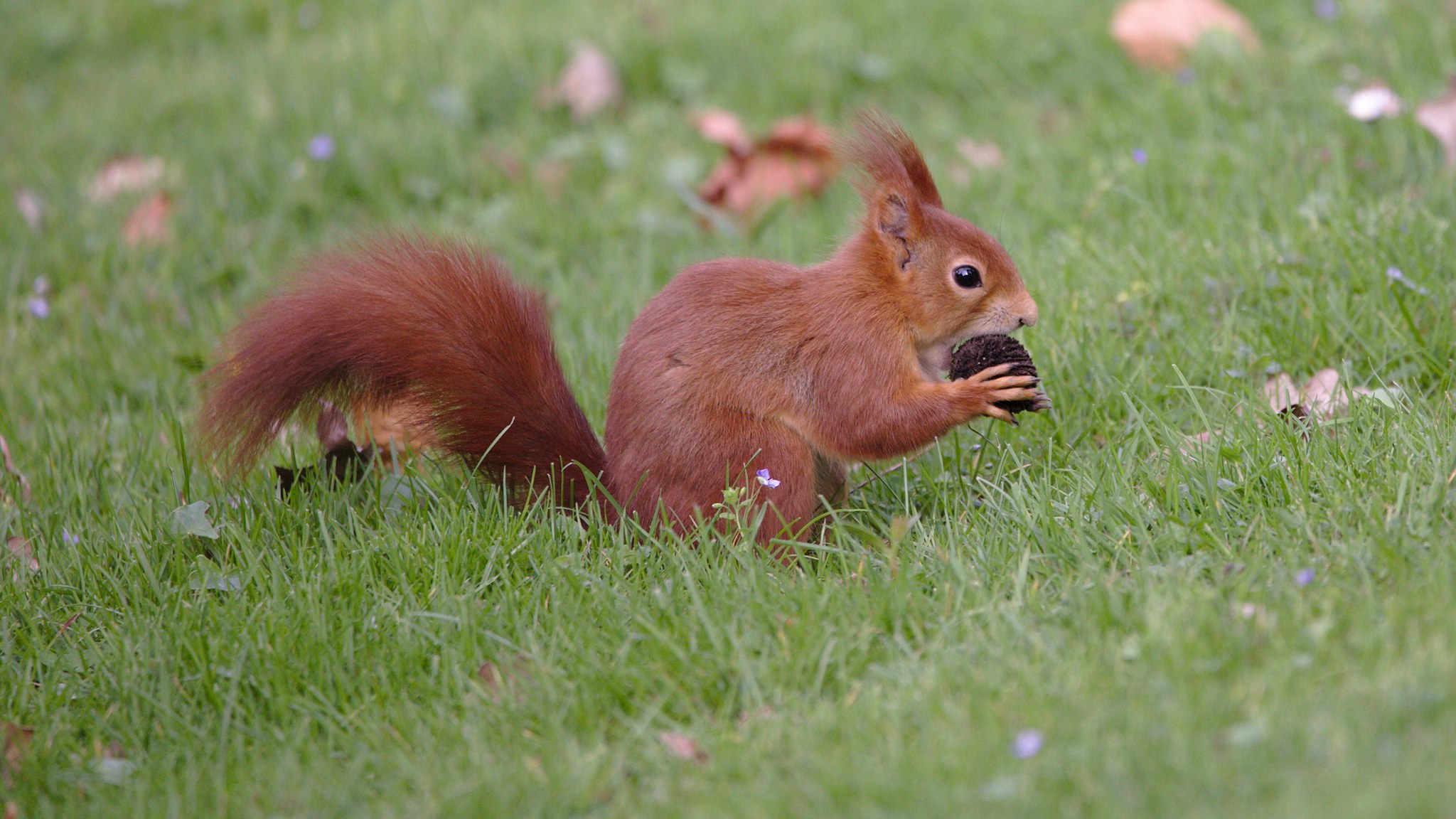
If red squirrels visit your UK garden and grey squirrels are absent, offer a small amount of in-shell hazelnuts, sweet chestnuts or beech nuts. The Mammal Society advises against feeding grey squirrels in the UK.
Check which squirrel is visiting
Colour alone can mislead: grey squirrels may have reddish patches. Check the tail: greys often have several shades and a pale edge, while a red squirrel’s tail is more uniform. If a grey visits your garden or touches a feeder used by reds, remove the feeder to reduce squirrelpox risk.
What do wild squirrels eat naturally?
Grey squirrels eat mainly acorns, nuts and tree seeds, with flowers, buds and shoots also in their diet. The Woodland Trust describes these natural foods and notes that greys store some nuts and seeds for winter. Red squirrels also rely heavily on tree seeds and nuts, and eat fruit, shoots and fungi.
When should you feed red squirrels?
The Wildlife Trusts advises checking for grey squirrels and nearby busy roads before attracting reds into a garden. If either is a problem, let them forage naturally instead of putting out food. Planting fruiting shrubs and trees can support natural feeding without concentrating squirrels at one station.
If neither risk applies, The Wildlife Trusts says you can offer a small supplement all year. Summer can be a lean period between spring shoots and autumn seeds, but reds should still find most of their own food.
Which foods can you offer red squirrels?
In-shell nuts: hazelnuts, beech nuts and sweet chestnuts are suitable choices.
Other seeds: a little pine nut or sunflower seed adds variety, rather than forming the whole feed.
Fresh extras: small pieces of apple or carrot can add variety.
These choices follow the Mammal Society and Wildlife Trusts guidance linked above. Peanuts are not the best staple: The Wildlife Trusts says that, if used, they should be aflatoxin-free and only part of a varied diet.
Only put out small amounts of food every few days
How can you feed them safely?
Place the feeder above ground near an escape route, away from cat ambush spots.
Remove uneaten food before refilling. Clean and disinfect the feeder regularly; shared feeding points can spread disease.
Check for leftovers and rats. Reduce the amount or pause feeding if food is not being eaten promptly.
Keep your distance. Do not hand-feed squirrels or invite them indoors.
The Mammal Society’s feeding guidance explains the need for small amounts, clean stations and avoiding close contact. Fresh drinking water can help garden wildlife, especially in dry weather.
Do you need to buy squirrel food?
No. For red squirrels in a suitable garden, you can use a small variety of the foods above instead of buying a special mix. If you do buy one, check the ingredients: peanuts should be only a small part of the diet. Feeding is optional; trees and shrubs that provide natural food can help without a feeder.
Related reading: Red vs Grey Squirrels: How to Tell Them Apart in the UK; Can Squirrels Eat Salted Peanuts? What to Offer Instead; Do Squirrels Eat Fruit? What UK Garden Visitors Eat.
Sources & further reading
- Mammal Society, “Feeding Mammals Guidance” (page shows 16 November; year not stated; checked 25 September 2026): Read source
- The Wildlife Trusts, “Helping red squirrels” (date not stated; checked 25 September 2026): Read source
- Woodland Trust, “Grey squirrel” (date not stated; checked 25 September 2026): Read source