.jpg)
A black-and-yellow visitor is not automatically a wasp. In a UK garden, start with its head: a hoverfly often has large eyes and short antennae; a bee or wasp has longer antennae. If you can see the wings, a hoverfly has one pair, while bees and wasps have two pairs that can be hard to separate at a glance. Use several clues together and leave any insect you cannot identify undisturbed.
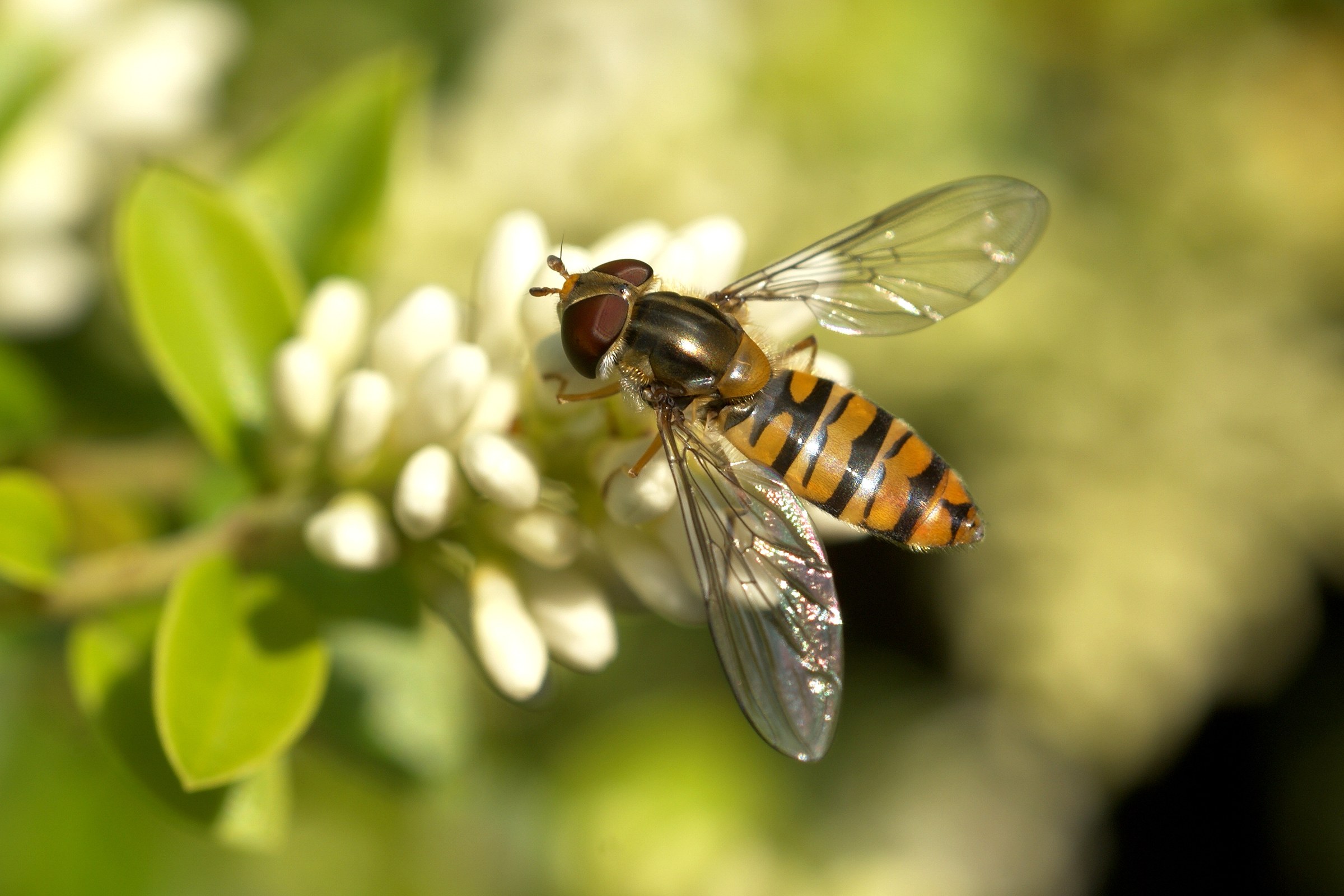
Bee, wasp or hoverfly: the quick comparison
 Hans Hillewaert · Licence | 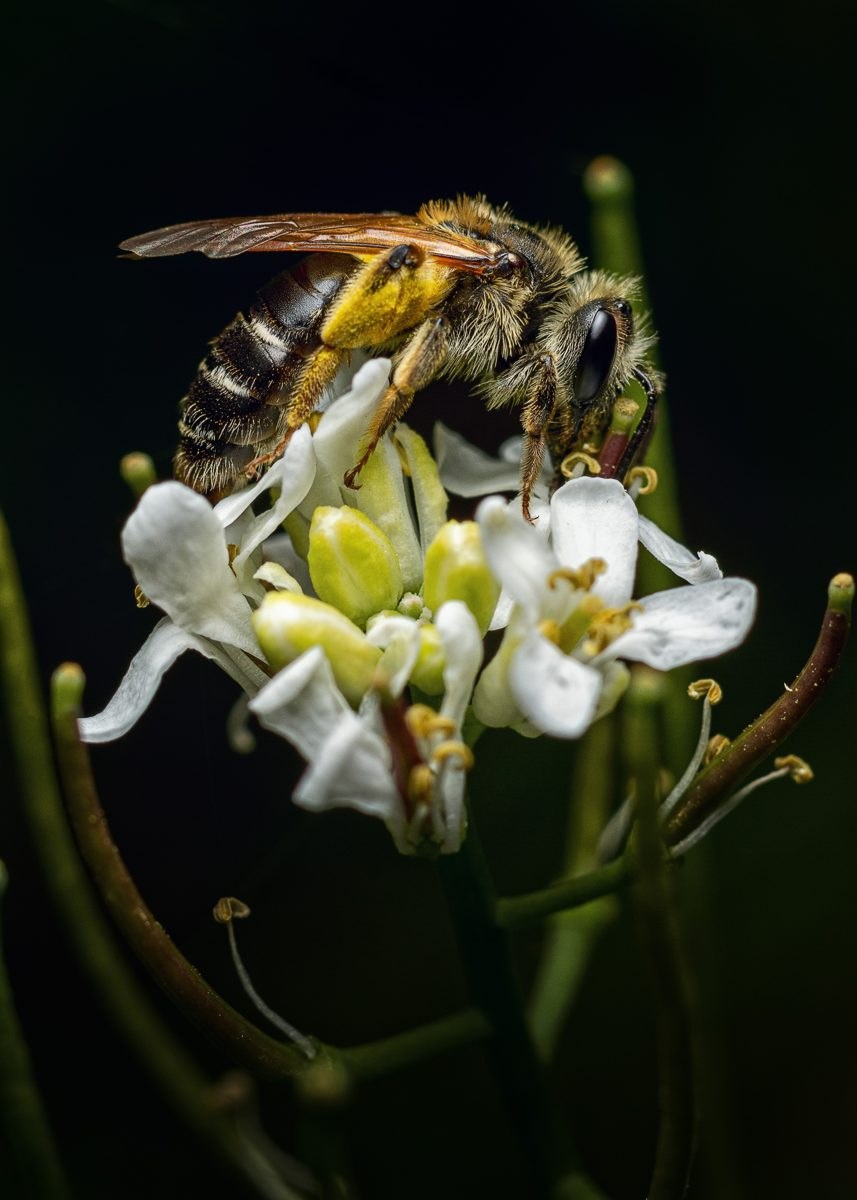 Plaksin Alexander · Licence | 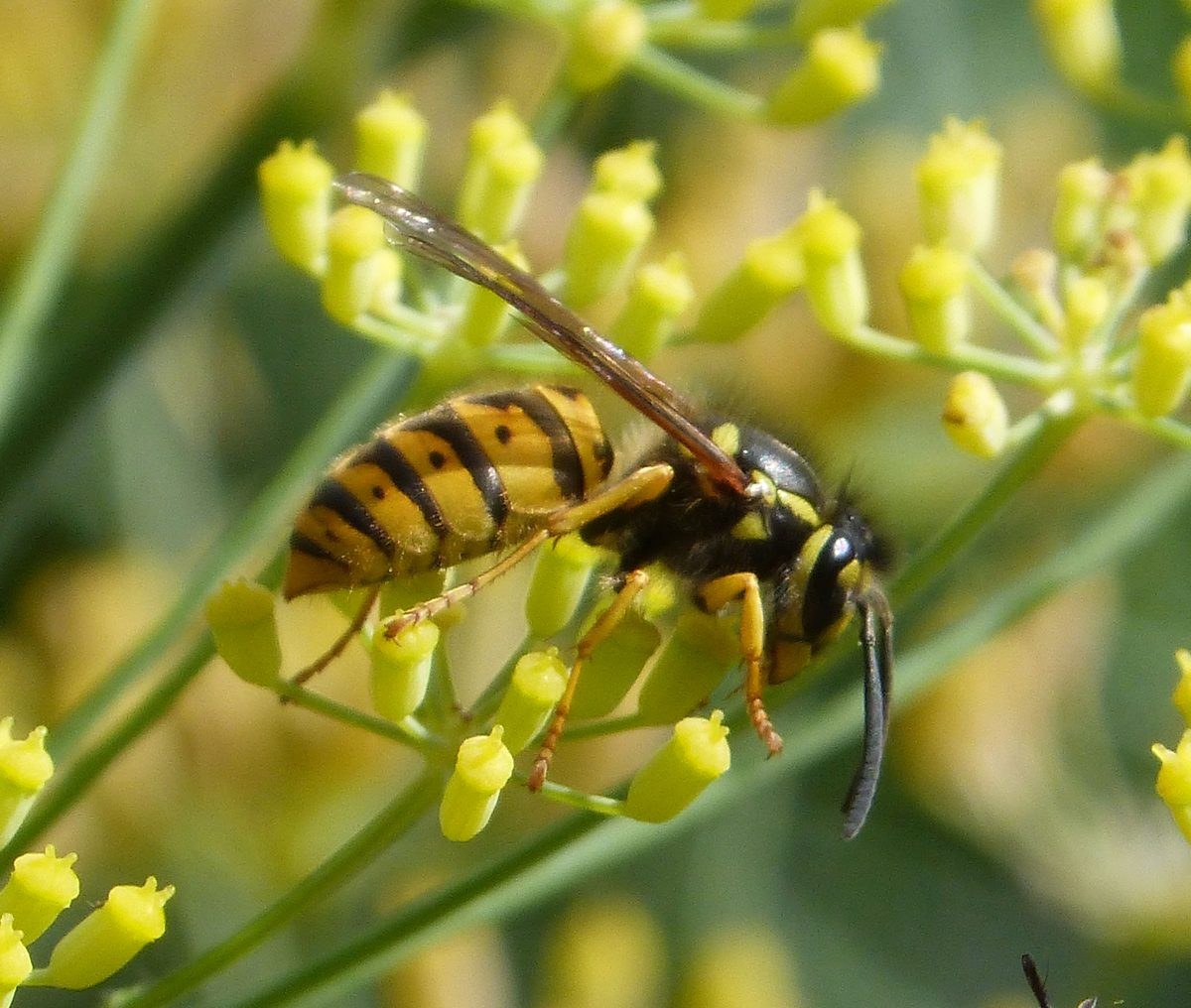 Gail Hampshire · Licence |
_on_a_flower.jpg)

Hoverfly: Large eyes, short antennae and one pair of wings. Some are striped or furry.
Bee: Longer antennae and two pairs of wings. Often hairy; some carry visible pollen.
Social wasp: Longer antennae and two pairs of wings. Usually smoother, slimmer and visibly waisted.
These are group-level clues, not a species key. Colour, hair and hovering can mislead: some hoverflies mimic furry bumblebees, and some bees can hover. The Wildlife Trusts’ garden insect guide describes the difference in antennae and body shape; the RHS hoverfly guide explains the wing difference and mimicry.
However, hoverflies do not bite or sting.
What should I check first?
Watch from a comfortable distance. Notice whether the insect is on flowers, fruit or repeatedly entering the same hole. Do not block a flight path to a nest.
Look at the head in a photograph. Large eyes taking up much of the head and stubby antennae point towards a hoverfly. Longer, obvious antennae point towards a bee or wasp.
Use body shape as a second clue. A furry insect carrying pollen is likely a bee. A relatively smooth insect with a narrow waist may be a social wasp. Neither clue works for every species.
Check wings only if the image is sharp enough. A fly has one pair; bees and wasps have two, but their wings can overlap. Do not catch an insect just to count them.
Can it sting?
Some bees and wasps can sting when threatened. A social wasp nest needs particular care. The RHS advises that wasps defend disturbed nests, including nests hidden in rough grass, hedges or compost.
If you find a flight path
Pause work near the entrance and give it space. Watch from farther back rather than blocking the route or trying to move the nest.
Why leave them in the garden?
Bees, hoverflies and wasps all have useful roles. Bees and adult hoverflies visit flowers. The larvae of many hoverfly species eat aphids, while social wasps feed caterpillars and other insects to their young. Their exact role depends on the species and life stage, so a striped visitor is worth observing before deciding it is a problem.
What if I still cannot tell?
Take a clear photo from above and from the side without approaching a nest. Try to include the head, wings and whole body, and note the date, place and what the insect was doing. A photo may identify the group even when it cannot establish a species. If a nest is near a doorway or somewhere people must work, identify the visitor before deciding what to do; do not use colour alone to judge the risk.
Sources & further reading
- The Wildlife Trusts. “Insect-friendly gardening”, checked 29 September 2026 — Read source
- RHS Advice Team. “Hoverflies”, checked 29 September 2026 — Read source
- RHS Advice Team. “Wasps (social) including hornets”, checked 29 September 2026 — Read source